Systems / Full catalog
Stop losing leads, service calls and ready-to-sell inventory between departments.
Every system here starts with something that happens in your store every day: a car clears detail, a call gets missed, a lead goes cold, a manager needs an answer. Open any of them to see how it works, what it produces, and what you measure.
Area / 01
Inventory + Marketing
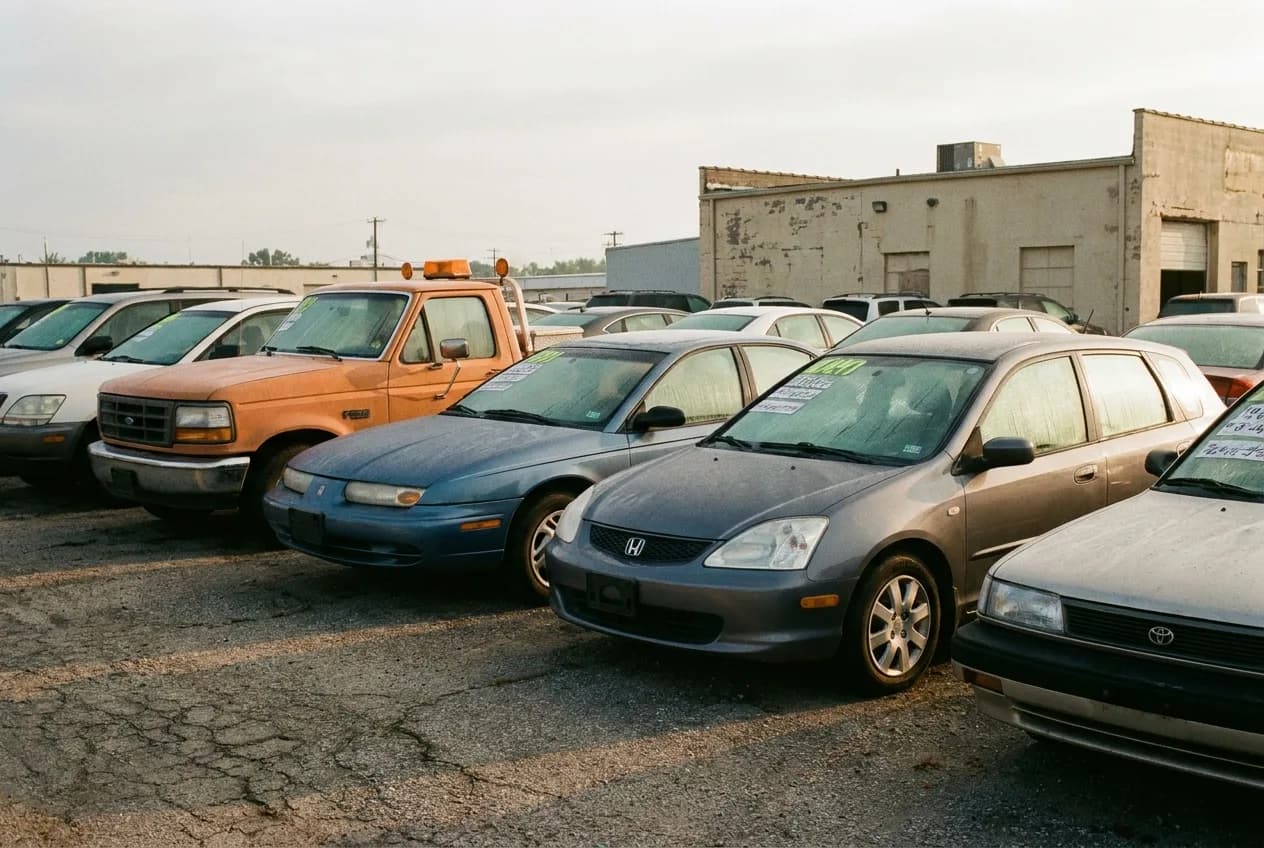
7 systems
01Vehicle merchandising and inventory content
Every day a ready vehicle is thinly merchandised is another day of weak discoverability and buyer uncertainty.
+
Photos, a VIN or stock number and the inventory record become channel-specific copy, image metadata, articles, ads, social assets and salesperson tools.
Complete VDP package, SEO assets, social kit, paid-media kit, article set and approval record.
Make-ready-to-live time, listing completeness, VDP engagement, leads per unit and days to sale.
The DMS or approved feed controls the facts. Unsupported options and financial claims do not pass.
02Inventory aging and turn management
Aging reports are often read after the damage is visible. Action should start when a unit crosses a risk threshold.
+
The system watches age buckets, price changes, lead activity, VDP traffic, market supply and merchandising gaps, then routes a specific action by stock number.
Daily exception list, repricing review queue, creative refresh, manager alerts and aged-unit campaigns.
Days in stock, age-bucket migration, price-to-market, VDP-to-lead rate and gross by age.
The system recommends. Authorized managers approve price decisions.
03Used-vehicle acquisition from the service drive
The drive contains known vehicles, known owners and timing signals that cold acquisition campaigns do not have.
+
Service appointments and customer history are matched against acquisition criteria, equity signals, vehicle demand and replacement options.
Daily acquisition candidates, advisor prompts, appraisal queue, outreach drafts and outcome log.
Appraisals requested, vehicles acquired, acquisition cost, gross and time-to-line.
No automated offer. Permission, valuation and manager review stay explicit.
04Reconditioning workflow and content handoff
Small delays compound when departments cannot see the same status or next owner.
+
Each vehicle is tracked from acquisition through inspection, parts, mechanical, body, detail, photos, merchandising and frontline release.
Unit timeline, blocker alerts, photo trigger, cost exception, ready-to-market event and aging dashboard.
Acquisition-to-line time, recon variance, days blocked, rework and days to first lead.
Actual costs and technician decisions remain authoritative. Estimates never silently become actuals.
05Website, inventory and local SEO audit
A multi-store group cannot rely on someone checking four pages a day while hundreds of pages change.
+
Every rooftop and inventory surface is checked for missing titles, schema, internal links, stale pages, broken forms, inconsistent NAP, thin copy and inaccessible media.
Prioritized defect queue, exact-page evidence, recommended fix, owner and recheck.
Defects closed, index coverage, organic impressions, local visibility, form completion and crawl health.
OEM-controlled and regulated pages are never changed without approval.
06Paid-media production and governance
Dealers need controlled variation and a clean landing path, not another pile of disconnected ad copy.
+
Inventory and service campaign assets are built from approved facts, checked against policy and offer rules, rotated when stale and connected to downstream outcomes.
Google Ads assets, paid-social variants, negative keyword ideas, landing briefs, budget exceptions and UTM plan.
Cost per qualified lead, appointment, show, sale or RO; rejection rate; impression share; gross after spend.
Offer terms, expiration, inventory status and OEM rules are validated before activation.
07Market intelligence and dealership content research
A static content calendar misses sudden changes in buyer questions, inventory pressure and service demand.
+
OEM news, incentives, recalls, model changes, local questions, reviews and competitor content become a prioritized editorial and operating brief.
Daily or weekly brief, article queue, FAQ updates, campaign ideas and process alerts.
Useful topics published, search visibility, response time to market change and assisted conversions.
Every factual claim carries a source and date. Rumors and uncertain data stay quarantined.
Area / 02
Sales + BDC

4 systems
01Lead response, persistence and nurture
Human teams often perform well at the start and lose consistency as the lead ages.
+
The workflow responds quickly with inventory-aware messages, then maintains a useful cadence after day four across email, SMS and rep task queues.
First response, question handling, appointment prompts, long-tail nurture, rep alerts and handoff summary.
Response time, contact, appointment, show, close, opt-out and aged-lead recovery.
Consent, quiet hours, frequency caps, identity disclosure and human escalation rules are enforced.
02Missed-call and after-hours recovery
The opportunity disappears quickly when the customer calls the next store.
+
Unanswered calls are captured, intent is identified, safe questions are answered, appointments are booked when possible and clean callback tasks are created when they are not.
Callback queue, appointment, transcript summary, intent tag, urgency flag and manager reporting.
Connection, recovered calls, booked appointments, transfer success, abandonment and recovered revenue.
A failed transfer creates an immediate callback path, never a dead end.
03Call, chat and salesperson coaching
Reviewing a small sample by hand hides the recurring behaviors that cost appointments or trust.
+
Calls and conversations are scored against dealership standards so missed questions and short coaching examples reach the right manager.
Scorecard, clipped example, coaching task, team trend and follow-up verification.
Contact-to-appointment, appointment-to-show, quality score and improvement after coaching.
Monitoring is disclosed as required, access is restricted and scores are interpreted by a person.
04Agent-to-agent lead firewall
Sales staff can spend hours negotiating with machines while the CRM records ordinary shopper engagement.
+
Inbound shopping agents are identified and routed into a separate intake path so their activity does not distort human lead statistics.
Agent classification, isolated transcript, structured offer request, rep summary and reporting separation.
Detection, staff time, false positives, valid opportunities and CRM integrity.
Legitimate customers are not blocked because they use assistive or shopping technology.
Area / 03
Fixed Ops

5 systems
01Service scheduling and capacity-aware booking
A booked appointment is not useful if it creates an impossible promise or sends the wrong work to the wrong day.
+
Customer intent, skill requirements, shop capacity, transportation needs, recall status and realistic slots are resolved before an appointment is promised.
Confirmed appointment, pre-arrival checklist, advisor summary, reminder sequence and manager review list.
Booking completion, steps to schedule, show rate, reschedule rate and capacity utilization.
Live capacity is authoritative and work that needs confirmation is clearly disclosed.
02Pre-arrival service diagnosis
Better information before arrival can reduce diagnostic delay and improve bay throughput.
+
Structured follow-up questions turn the customer's description into a technician-ready symptom summary and request supporting media before arrival.
Concern summary, symptom timeline, warning-light notes, media, advisor questions and preliminary routing.
Diagnostic RO open time, additional labor hours sold, first-time-fix indicators and technician wait time.
The system gathers symptoms, not a definitive diagnosis. Safety-critical concerns escalate immediately.
03Recall and dormant-customer recapture
Recall work and overdue maintenance are mechanically identifiable opportunities many stores handle inconsistently.
+
Customer VINs are matched to open recalls or overdue services, reachable records are prioritized and consent-aware outreach runs to live booking.
Qualified audience, outreach sequence, booking link, advisor context, attribution and suppression rules.
Appointments, completed ROs, revenue, gross, reactivation and cost per completed appointment.
Fresh recall data, identity matching, consent and completed-work suppression are mandatory.
04Technician video and MPI quality control
A video only helps when customers watch it and trust what they see.
+
Walkaround and inspection videos are checked for visibility, completeness, required measurements, language and customer usefulness.
Quality score, missing-evidence prompt, coaching queue, compliance alert and manager trend report.
Video completion, customer view rate, hours per RO, recommendation close rate and rework.
No automatic customer charge or recommendation can be based on a model score alone.
05Lane inspection and damage documentation
Fast, consistent evidence can improve trust and prevent the store from absorbing pre-existing damage claims.
+
Images or scanner results become consistent condition records for check-in, appraisal, tire and alignment review and policy-claim defense.
Arrival condition record, annotated exception, customer evidence, appraisal input and claim packet.
Inspection time, policy spend, claim resolution time, tire close rate and alignment close rate.
Customer billing always has human review and an appeal path.
Area / 04
Data + Management

3 systems
01CRM data hygiene and matching the right customer, VIN and store record
Personalization and reporting both fail when the underlying customer record is wrong.
+
Duplicates, stale contacts, unusable fields, conflicting identities and broken lead sources are identified for suppression, enrichment or reviewed merge.
Quality score, merge suggestions, enrichment queue, source cleanup and suppression list.
Reachable records, duplicate rate, valid contact rate, source integrity and campaign waste.
High-impact merges and deletions require review and a recoverable audit trail.
02Executive ask-your-data reporting
The best question is often the one the standard report never included.
+
Approved DMS, CRM, web, phone, inventory and financial data are connected so leaders can ask plain-language questions and receive traceable answers.
Answer, chart or exception list with source tables, filters, time window and reproducible query.
Report wait time, recurring manual hours, decision cycle and verified opportunities discovered.
Every answer includes lineage and sensitive data follows role-based permissions.
03Review sentiment and customer-experience intelligence
The value is finding a pattern and changing the operating process that created it.
+
Google, Facebook, survey and internal feedback are combined to identify recurring problems by rooftop, department, brand and journey stage.
Theme dashboard, urgent escalation, response draft, root-cause brief and owner assignment.
Rating, response time, topic recurrence, resolution time, CSI and process-change completion.
Sensitive complaints route to a person and customer-specific facts are never fabricated.
Area / 05
People + Risk

4 systems
01OEM policy and dealership knowledge assistants
A correct answer in seconds beats a fifteen-minute PDF search.
+
Warranty manuals, incentive bulletins, process documents and training materials become a permissioned assistant with source citations.
Answer with citation, source excerpt, confidence flag, escalation and update log.
Time to answer, search success, exception rate, repeat questions and training time.
The assistant shows its source and effective date. No answer is better than an invented answer.
02F&I opportunity, coaching and compliance review
The highest-value discovery may be a process question management did not know to ask.
+
Deal records, calls and product explanations are reviewed for missed steps, unclear warranty language, process gaps and coaching moments.
Missed-opportunity report, coaching clips, disclosure checklist, manager review list and trend analysis.
Products per deal, gross per retail unit, cancellation, compliance exceptions and coaching completion.
No autonomous financing decision, legal conclusion or customer promise.
03Brand and communications consistency
Small inconsistencies create customer confusion, compliance exposure and needless manual cleanup.
+
Staff signatures, bios, location details, templates, offer disclaimers and recurring content are standardized across rooftops.
Approved signature, profile, template, location record, exception alert and periodic audit.
Compliance rate, correction time, outdated profile count and brand exceptions.
Local store details and role data come from a controlled directory.
04Staff onboarding and role-specific assistants
Consistent execution should not require a new employee to memorize every document on day one.
+
Store process, product knowledge, scripts, escalation rules and daily checklists become a role-aware assistant.
Daily guide, answer with source, practice scenario, manager checklist and knowledge-gap report.
Time to proficiency, manager support time, error rate, knowledge checks and retention.
The source library is versioned, permissions are role-based and policy answers cite the current document.
The boundary is part of the build
What we do not automate.
Invented prices, discounts, warranties or promises
Customer billing from a computer-vision score alone
Lead outreach without consent and suppression controls
Black-box reporting that cannot show its source
Duplicate content published only to create volume
High-impact decisions with no human handoff
Dealer Automation Audit
Choose the workflow with the clearest operating case.
We baseline the current path, the delay, the errors and the cost before recommending a build. A narrow pilot should prove the work before it spreads across rooftops.
Start the audit